



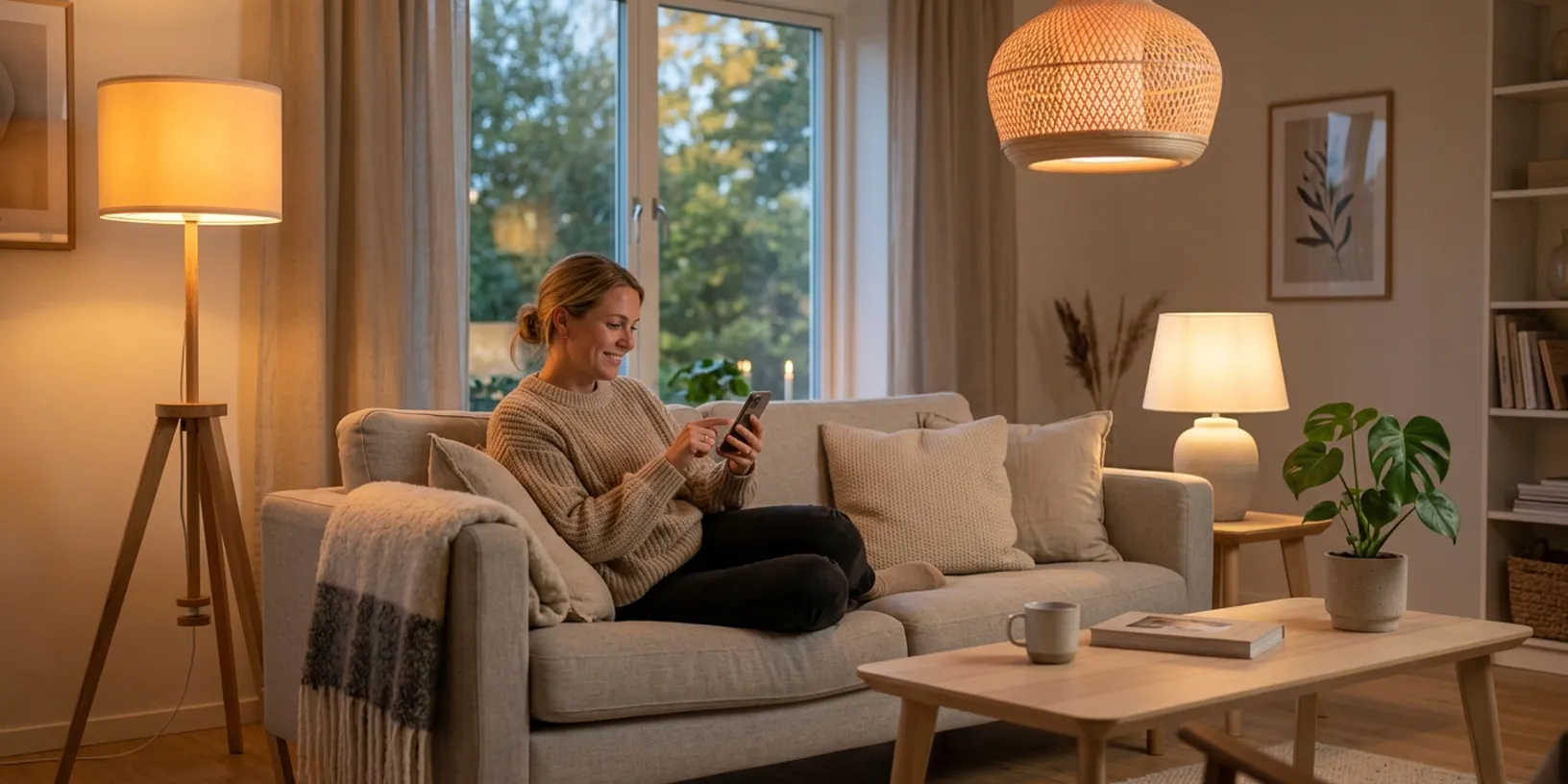
Do I need a hub for smart lights?
No, not if you choose smart lighting without a hub. Modern WiFi bulbs connect directly to your home WiFi and are controlled from your phone. That means you can skip extra boxes, bridges, and gateway solutions. For most people who want to start with app-controlled bulbs in the living room, bedroom, kitchen, or patio, a hub-free solution is the easiest choice.
A hub can still be relevant if you are building a larger smart home with many sensors, advanced automations, or Zigbee products. But if you want to get started quickly with smart lighting, dimming, color control, and scheduling, WiFi bulbs without a bridge go a long way.
What does smart lighting without a hub mean?
A bulb that works without a hub does not need a separate control box between the bulb and the router. You screw in the bulb, open the app, follow the instructions, and connect it directly to your WiFi. After that, you can turn it on and off, dim it, change the color temperature, and create schedules right in the app.
Many app-controlled bulbs use platforms like Tuya or similar solutions, which makes it easy to collect several bulbs in the same app. This is especially practical if you want to start small with one E27 bulb in the living room and then expand with E14, GU10, LED strips, or a smart light string without a hub.
WiFi, Zigbee, and Matter – what is the difference?
WiFi bulbs connect directly to your wireless network and normally do not require an extra hub. Zigbee bulbs use their own smart home network and usually need a bridge or gateway. Matter, however, is not a bulb type of its own, but a modern standard that makes it easier for products from different brands to work together in ecosystems like Google Home, Apple Home, and Amazon Alexa. In 2026, Matter is important to know about, but for beginners, WiFi without a hub is still the easiest way to get started.
Four benefits of smart bulbs without a hub
1. Quick installation
You do not need a technician or extra hardware. In many cases, the bulb is ready in just a few minutes.
2. Lower starting cost
Because you do not need to buy a bridge, the first purchase is cheaper. That makes WiFi-controlled smart bulbs perfect if you want to try smart lighting without a large investment.
3. Flexible placement at home
The bulbs work wherever your WiFi reaches. That makes them easy to use in bedrooms, living rooms, hallways, home offices, sunrooms, or on a balcony.
4. Automatic updates
App-controlled bulbs can receive software updates over the network, such as improved stability, new features, or updated color modes.
Quick comparison: WiFi versus Zigbee versus Matter
| Solution | Requires a hub? | Best for | Benefit | Drawback |
|---|---|---|---|---|
| WiFi bulbs without a hub | No | First smart lighting | Easy installation and low starting cost | Requires stable WiFi |
| Zigbee bulbs | Usually yes | Larger smart homes | Stable mesh network | Requires bridge/gateway |
| Matter-compatible bulbs | Depends on the technology | Mixed ecosystems | Better compatibility across brands | May require a controller or Thread router |
Which smart bulb should I choose?
For most homes, it is smart to start with WiFi-controlled smart bulbs. Choose the right base first: smart E27 for standard ceiling and floor lamps, E14 for smaller fixtures, and GU10 for spotlights. If you want to create a mood on the balcony, patio, or in the living room, a smart light string without a hub can be an easy next step.
Also look for RGB+CCT if you want to combine millions of colors with adjustable white light. That makes the bulb more flexible: cooler light when you work, warmer light in the evening, and colored light when you want to create a certain feel.
FAQ
Do smart bulbs without a hub work with Google Assistant and Alexa?
Yes, many WiFi bulbs work with both Google Assistant and Amazon Alexa. You normally connect the bulb app to the voice assistant and can then control the lighting with voice commands.
Are WiFi bulbs worse than Zigbee bulbs?
Not necessarily. WiFi bulbs are easier and cheaper to get started with. Zigbee is a better fit if you are planning a very large smart home with many devices.
Do I need Matter for smart lighting in 2026?
No, not to get started. Matter is mainly important if you want to mix products from several different ecosystems and future-proof your smart home.
Can I start with one bulb and expand later?
Yes. That is one of the major benefits of smart bulbs without a hub. You can start with a single bulb and then add more rooms, bases, and light sources at your own pace.
Get started easily
Smart lighting without a hub is the best choice if you want easy installation, low starting cost, and full control through the app. Start with one or two bulbs in the rooms where you notice the biggest difference, such as the living room, bedroom, or hallway. Browse our full range of smart bulbs without a hub and choose the model that suits your home best.